

Windows & Doors
CONTENTS:

Choose The Right Energy Efficient Windows
Key Window Components & Energy Efficiency Features
| Choose a Style of Window | |
The style of window you choose affects more than just appearance. It also impacts how much natural light enters your home, how well it stays insulated, and how easy the windows are to clean and operate. | 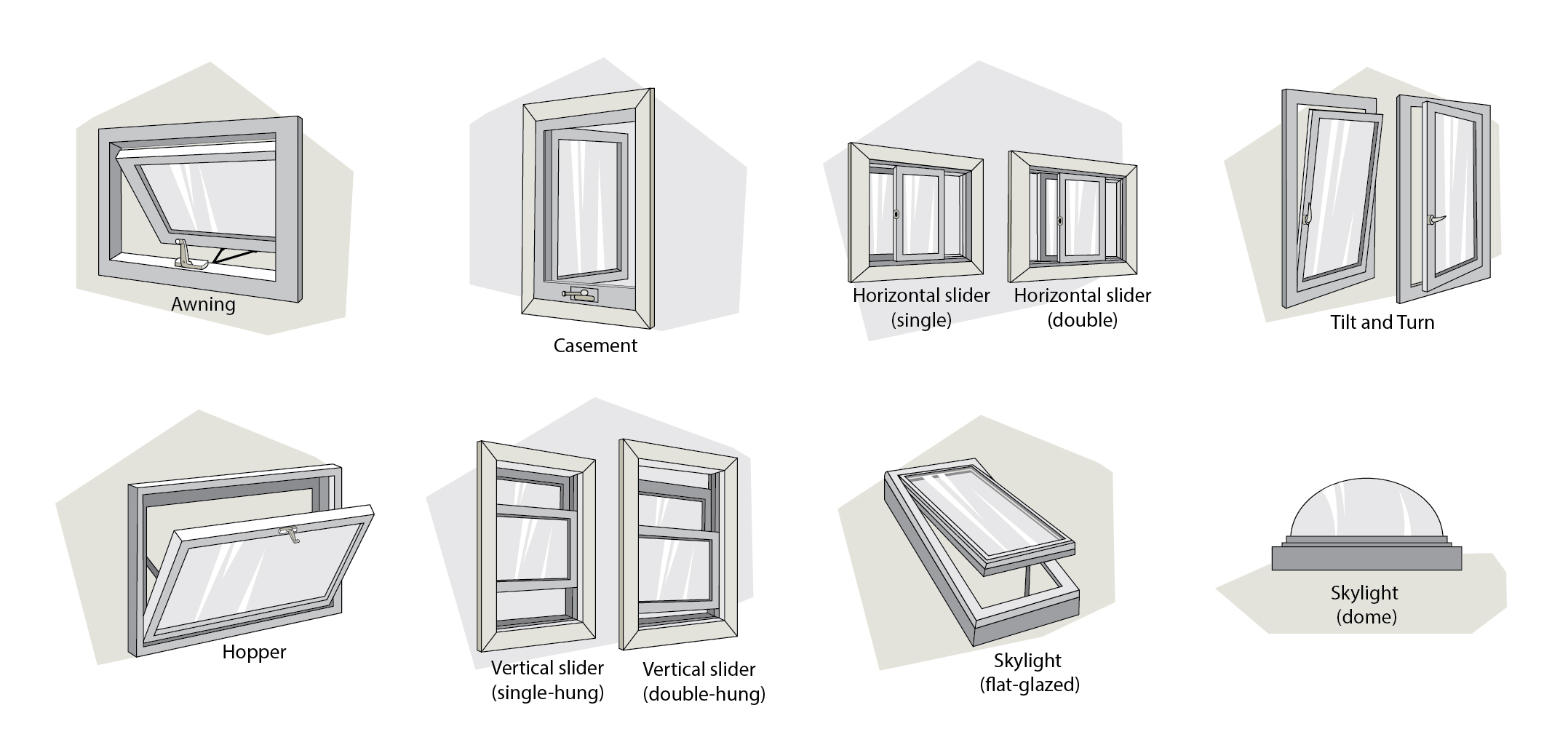 Source: Natural Resources Canada, "Figure 8-1: Types of windows," Keeping The Heat In. |
| Here's a guide to the most common window styles and what each is best suited for. | |
Common Window Types

Pro Tip!
Window style affects energy efficiency. Casement and awning windows usually seal tighter than sliders, making them better for cold, windy climates like Manitoba.
| Choose the Window Glazing When choosing new windows, glazing is one of the most important decisions you’ll make. Glazing refers to the glass in your window — including whether it is double- or triple-pane, what coatings are applied, and how well it is insulated. The right glazing can make your home feel more comfortable year-round by reducing drafts, preventing condensation, and keeping heat where you want it. It also affects how much natural light comes in and how much you spend on heating and cooling. In this step, we’ll walk you through the different glazing options and help you understand which choice is best for your home and Manitoba’s climate. If you’d like to understand the performance metrics behind glazing — including U-factor, Energy Rating, SHGC, and Visible Transmittance — see Step 2: Why Window Energy-Efficiency Ratings Matter. | |
| Number of Panes (Single, Double, Triple) Windows with two or three layers of glass (double- or triple- pane) provide better insulation than single-pane windows. This means less heat escapes in winter less heat enters in summer, free drafts and reduced outside noise. | 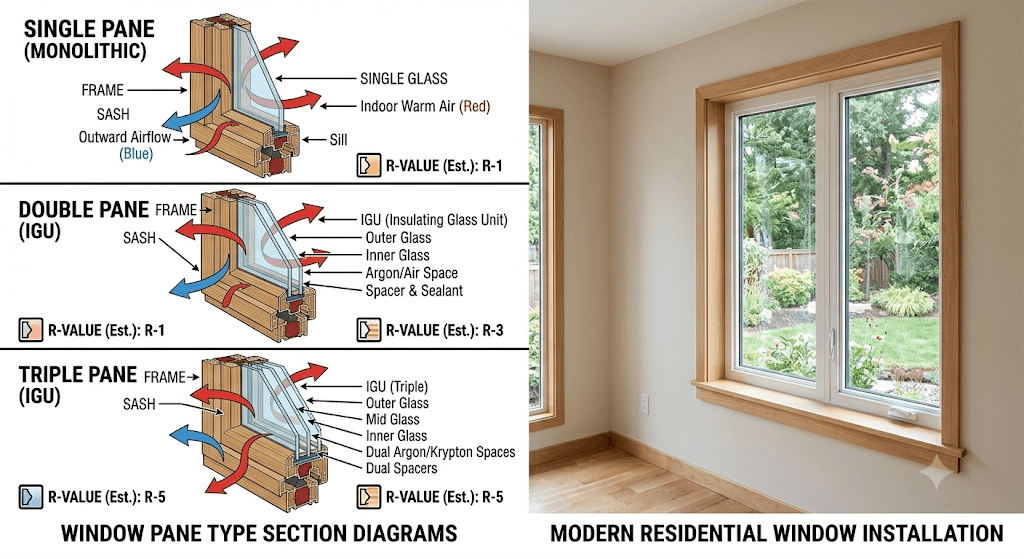 Image generated by Google Gemini |
Choosing Between Single-, Double-, and Triple-pane Windows
Pro Tip!
If your budget allows, the general advice is to invest in the highest-quality windows you can. Many homeowners find that the improved energy efficiency, comfort, condensation control, and long-term benefits of triple-pane glass windows are well worth the added cost.
How Insulating Gases Impact Window Glazing for Better Energy Efficiency
Pro Tip!
Consider orientation:
South-facing windows can benefit from glazing that lets in more solar heat, while north-facing windows may need maximum insulation to reduce heat loss.
What to watch for when purchasing:
Not all double-pane glass windows include gas fill by default. Basic double-pane glass units that are not ENERGY STAR® certified may contain only air.
Always confirm in writing that the product you are purchasing includes argon or better. Ask your supplier to specify the gas fill type on the quote and invoice.
If a product is ENERGY STAR® certified for Manitoba’s climate zone, it will include an insulating gas fill as a requirement of certification.
Upgrading from an air-filled double-pane glass window to an argon-filled unit can improve the window’s insulating value by up to 16%. Choosing krypton over air in a triple-pane unit can improve insulation by up to 27%.
| Low-Emissivity Coatings | ||
| Low-emissivity — Low-E — coatings are thin, invisible layers added to window glass that improve energy efficiency. They work by reflecting heat while still letting light pass through. | In Manitoba’s climate, Low-E coatings are especially helpful. In winter, they reflect heat back into your home to keep it warmer. In summer, they can reduce the amount of heat entering from the sun, helping your home stay cooler. For a deeper look at how Low-E coatings interact with Solar Heat Gain Coefficient — SHGC and orientation, see Solar Heat Gain Coefficient — SHGC. | Many modern windows come with at least one Low-E coating. Some high-performance windows have multiple layers to further improve insulation. Choosing the right Low-E option can make your windows feel less cold to the touch, reduce condensation, and help lower your energy bills — without making your home dark. |
How Low-E Coatings Enhance Window Glazing for Better Energy Efficiency
Pro Tip!
Many new windows include Low-E coatings by default, but always verify this before you buy — ask your supplier to confirm the coating type and position on the quote.
| Choose a frame material |
| The material you choose for your window frame affects more than just how it looks. It also impacts energy efficiency, condensation, durability, and maintenance. Even with high-performance glass, a poor-quality frame can allow heat to escape through thermal bridging — when heat passes through the frame rather than being stopped by it. |
What To Know About Frame Materials for High Energy Efficient Windows
Common Types of Frame Materials for High Energy Efficient Windows
Pro Tip!
In Manitoba’s cold climate, choosing frames that minimize heat loss is key to getting the full benefit of energy-efficient windows.
To reduce condensation on window frames, keep indoor humidity between 30–40% during winter and ensure proper air circulation near windows.
Using kitchen and bathroom exhaust fans or running a heat recovery ventilator (HRV) can help manage moisture levels effectively.

